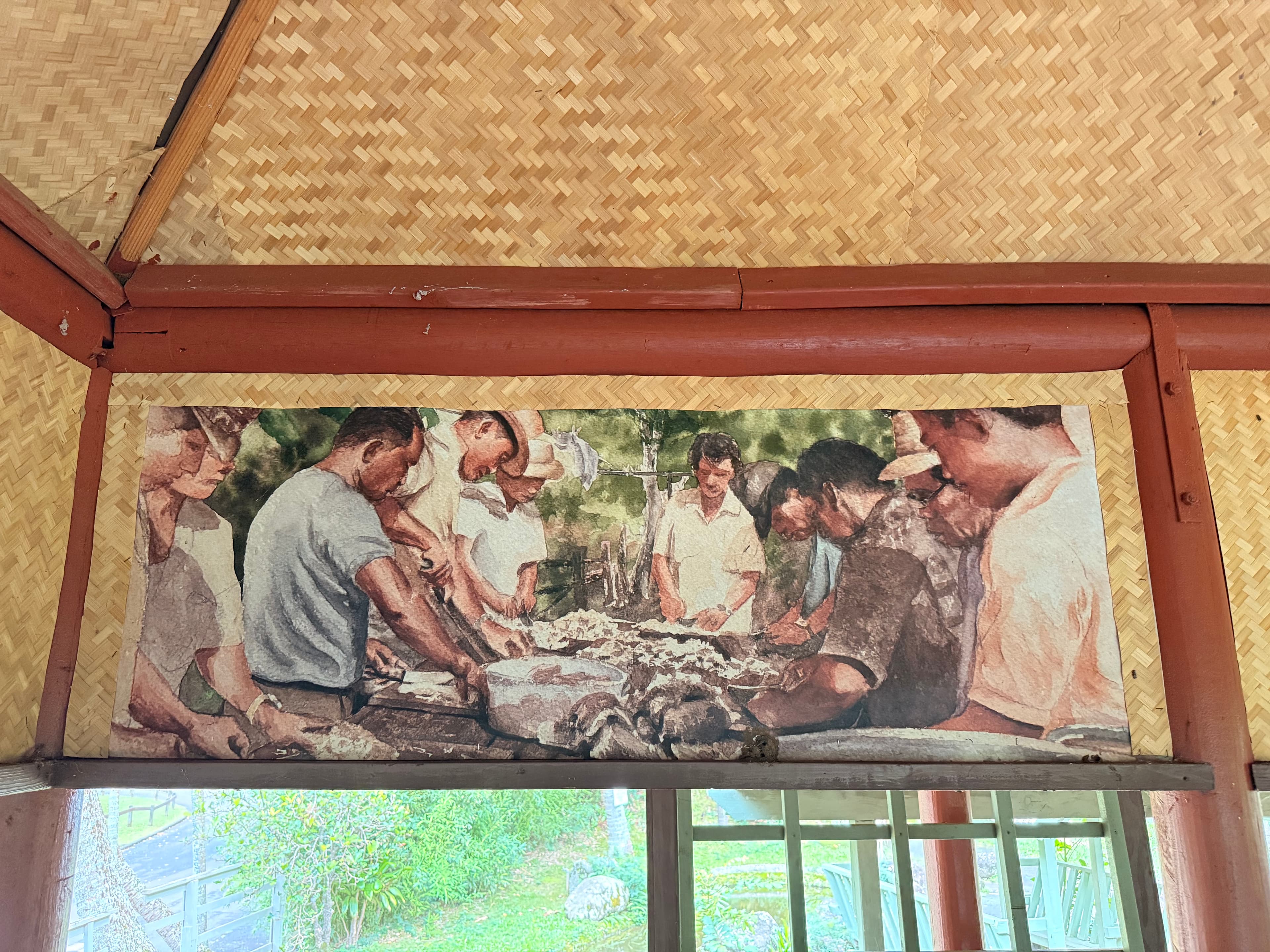
Handaan is a Filipino feast — food prepared for a community celebration, when many gather to eat, visit, and feel like family. Days in the fields often began before sunrise, and gatherings — birthdays, baptisms, fiestas, and parties after a hard week — were cherished cultural events.
Cooking for a crowd often started over an open fire, with food simmering in a large silyasi (also called a talyasi) — a deep iron wok big enough to feed many guests. In Hawaiʻi, cooks often burned kiawe wood, which burns hot and long. Experienced cooks tended the fire and the pot; younger helpers cut ingredients, stirred, and learned by watching. No one needed to be paid. Camaraderie, family, and the joy of feeding the community were reward enough.
By the time the food was served, the cooks had become a jovial circle — living for these special moments when everyone felt like family. Visitors to the bahay kubo can almost smell the smoke and hear the laughter.
On display inside the bahay kubo at Kepaniwai Heritage Gardens, ʻĪao Valley, Maui. Scan the QR code beside this work — or share this page — for the same story in your hand.