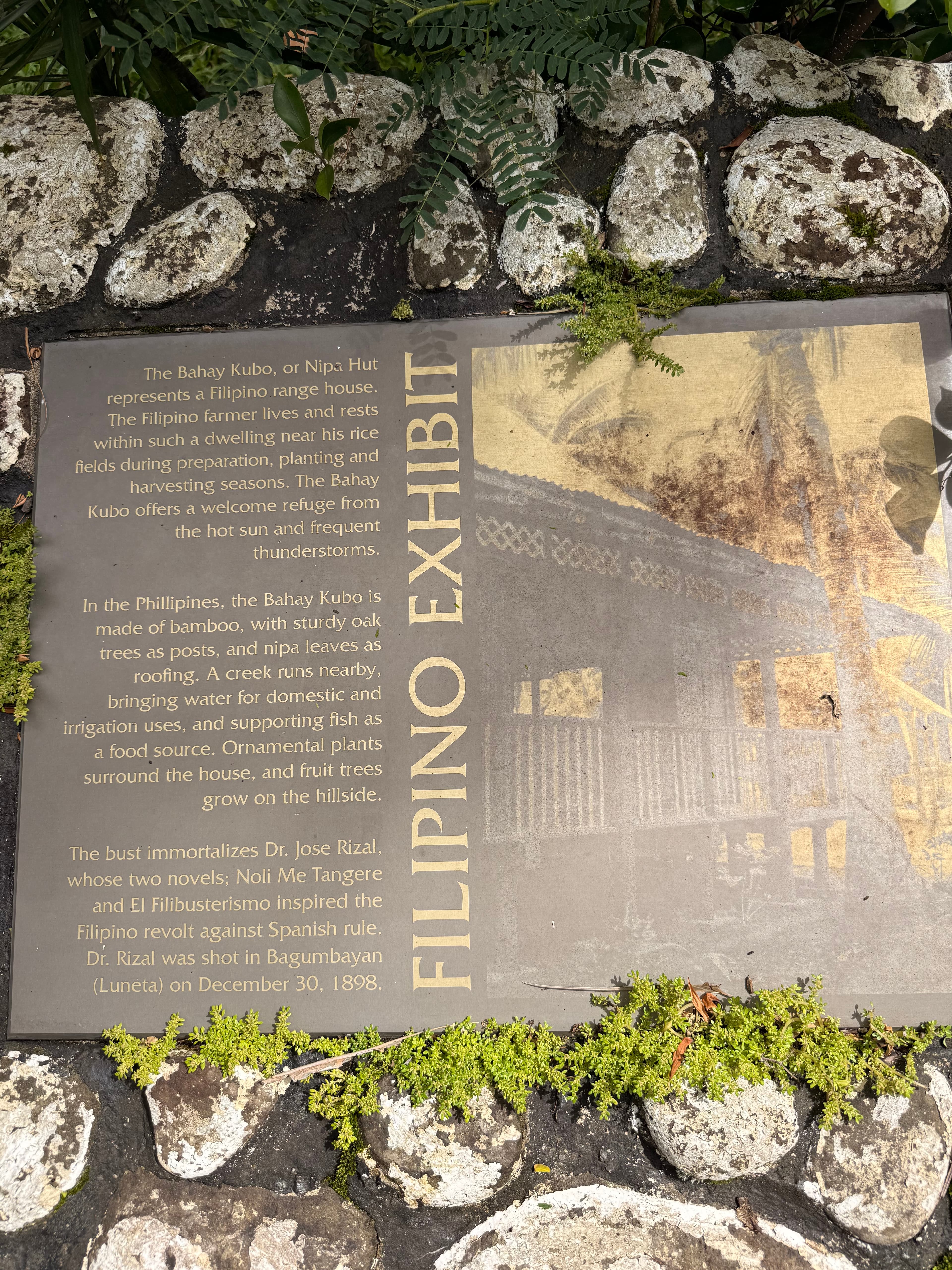
The park’s Filipino Exhibit plaque introduces the bahay kubo — sometimes called a nipa hut — as a traditional Filipino farmhouse. A farmer and family lived and rested here near the rice fields through planting and harvest, finding refuge from sun and storms. In the Philippines the house is made of bamboo, sturdy posts, and nipa-leaf roofing, often with a creek nearby for water, irrigation, and fish, and with fruit trees and ornamental plants around the home.
The plaque also points visitors toward the nearby bust of Dr. José Rizal, whose novels helped inspire the Philippine struggle for freedom from Spanish rule. Together, the house and the grounds invite everyone to learn how Filipino culture found a lasting home in Hawaiʻi.
On the grounds at Kepaniwai Heritage Gardens, ʻĪao Valley, Maui. Scan the QR code beside this piece — or share this page — for the same story in your hand.