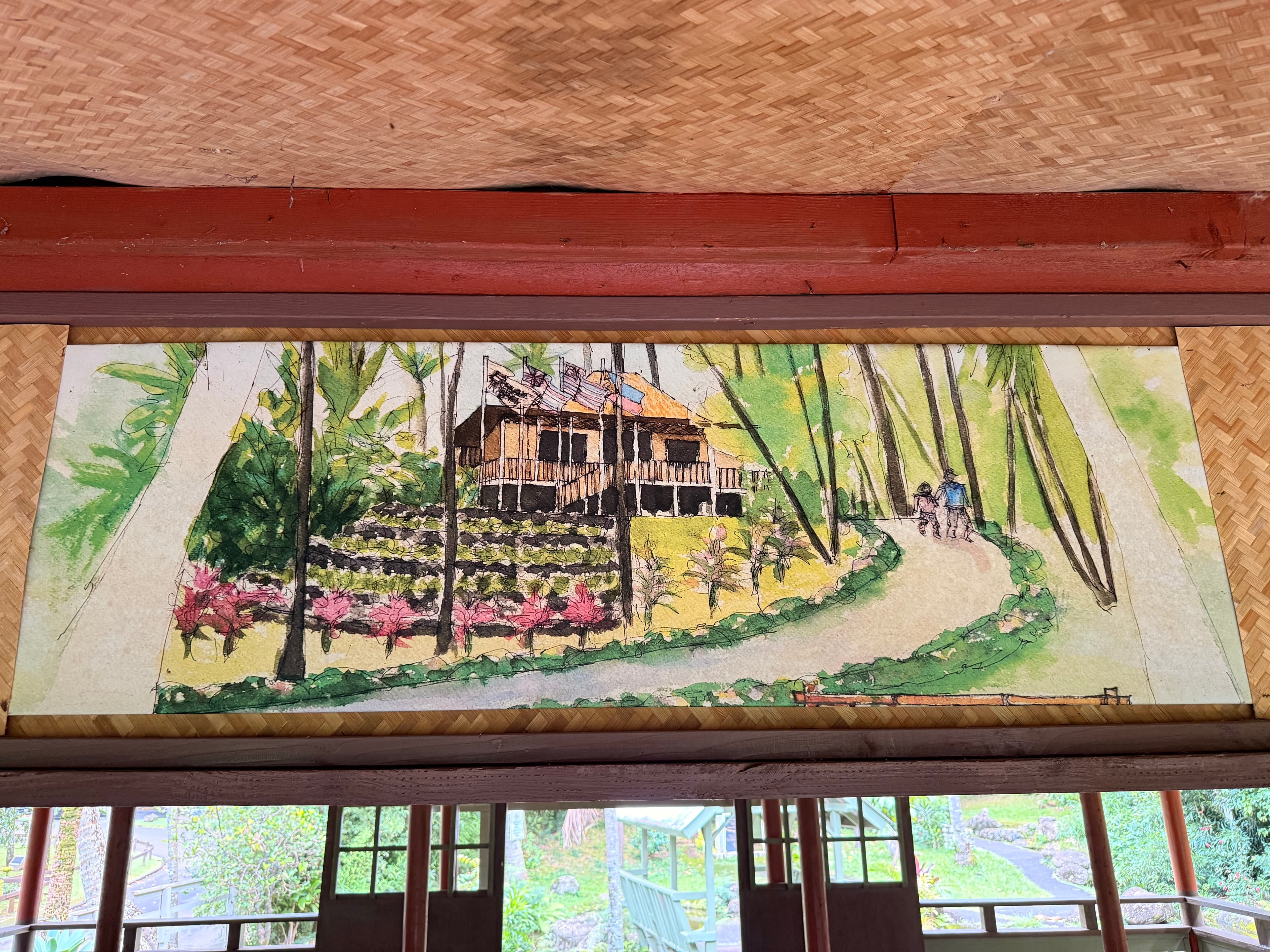
This bahay kubo at Kepaniwai Heritage Gardens is a living piece of Filipino heritage on Maui. The paintings inside help tell the story of Filipino life — home, work, celebration, and community — that generations brought from the Philippines to these islands.
A bahay kubo stands on stilts. The open space beneath the living floor is called the silong (Tagalog for “shade” or “shelter”). It helps buffer rising floodwaters and keeps animals and pests out of the rooms above. The living area is designed to welcome fresh air and natural light. Many smaller houses have bamboo-slat floors so cool air can rise from the silong below. Some are built without a kisame (ceiling), so warm air can rise into the roof space and leave through vents near the peak.
Every detail is practical — and beautiful. Looking at this house form, visitors can begin to understand how Filipino families shaped a home that breathes with the climate.
On display inside the bahay kubo at Kepaniwai Heritage Gardens, ʻĪao Valley, Maui. Scan the QR code beside this work — or share this page — for the same story in your hand.